
Dated January 12, 2021. Performance information has been removed from this version in accordance with the firm's policy on publicly available materials, adopted in 2026. Because the removals were made largely by cutting rather than rewriting, some passages are incomplete or end abruptly. Performance information is available to qualified investors on request — contact ir@philipequities.com.
Thoughts on 2020's Severe Stress Test of Portfolio with Focus on AerCap & Sallie Mae
These case studies were selected to illustrate our investment process during periods of market stress and are not necessarily representative of all fund investments.
Introduction
On October 30th Henry Kravis said, "I've been investing for over 50 years; I don't remember a time when I've seen such volatility as we see today."
Particularly during the depths of the coronavirus crisis, when liquidity tightened, it was useful to remind oneself, like Jeff Bezos did during the dot.com boom and bust, that "the stock is not the company and the company is not the stock."
The Fund did endure significant volatility as the portfolio's businesses faced material headwinds. AerCap was impacted by global travel coming to a halt, Sallie Mae by a drop in student loan originations, credit stress, and net interest margin (NIM) contraction, Wells Fargo by NIM contraction and credit stress, Ally Financial by credit stress (and initially the strange idea that people would stop driving), Synchrony Financial by credit stress and store closures. However, despite this worse than severe stress test, which resulted in significant mark-to-market price volatility, all portfolio businesses were profitable in 2020. Before I joined my employer, I often received feedback that I had not yet demonstrated the ability to invest through a market downturn. While the coronavirus crisis has been a tragedy for the world, it provided a maximally severe stress test of the portfolio, which the Fund evidently endured.
AerCap
AerCap, the Fund's largest holding going into the crisis, represents the perfect example of my investment philosophy and process withstanding a greater-than-imagined severe stress test. AerCap, the largest aircraft leasing business in the world, was at the center of the coronavirus storm. If there was ever an unlucky event that would cause permanent loss of capital for the Fund, this was truly it. Periods such as 9/11 had caused temporary disruptions to air travel in specific geographies, but no one imagined a global disruption for over a year. Despite this global pandemic this global pandemic being among the most severe crises in aviation history (and probably for the rest of our lifetimes), AerCap continued to collect cash from its airline customers, worked with OEMs to push out CAPEX, and worked with creditors to raise more funds and to pay off near-term debt.
Today, we believe AerCap may be positioned to benefit from industry distress through share repurchases and/or sale leasebacks and/or M&A. AerCap will also have improved leverage in negotiations with airline customers as they work to reduce debt while adjusting to lower profitability due to their lower levels of business travel. On November 13th, 2020, an article on Bloomberg by David Fickling stated: "Airlines have issued $88 billion of debt so far in 2020, more than half the $153 billion that the industry sold over the previous four decades put together." The natural conclusion to this development is that if you are running an airline, it makes sense to make relatively small lease payments to AerCap, which can borrow money to purchase planes at vastly less expensive rates, and then use the cash your airline organization may have otherwise spent to purchase a plane to instead pay down debt (especially when some of the debt may be government debt that restricts your own executive compensation).
Also, worth noting is my view that while AerCap's solid spread business seems to be recognized by thought leaders in the space, other AerCap profit centers and competitive advantages remain underrecognized or totally unrecognized. First, AerCap, as the largest aircraft leasing company in the world, has the ability to function almost like an old-school high-yield bond trading desk in which AerCap can use its superior data to profitably take long positions in aircraft and profitably time sales. Second, AerCap serves as a special partner to an airline by not only leasing aircraft at a competitive price, but also by enabling airlines to sell aircraft and to flex their fleet on demand. This creates an incentive for an airline to lease with AerCap rather than a marginally lower cost competitor (i.e. their spread business is not quite a commodity). Third, a large airline like American Airlines can efficiently maintain aircraft; however, for smaller airline lessees who cannot efficiently maintain aircraft, it often makes more sense to pay AerCap maintenance rent than to take the aircraft out of service. This boosts AerCap's profitability.
At the end of Q3, AerCap took a roughly 10% hit to book value. This was a dramatically worse event than anyone could have anticipated prior to the crisis, but ultimately the enormous margin of safety in our investment not only protected the Fund from permanent loss of capital, but also sets the Fund up to profit despite the negative tail risk events.
Plus, AerCap has consistently sold aircraft for significantly above book value (including during the pandemic), so it would be reasonable to believe that this write-down of book value may have been an overestimate that sets the company up for gains on sale going forward. The fact that the write-down was calculated before the unexpectedly positive vaccine news materially strengthens this view.
AerCap demonstrated considerable resilience during the crisis. Thus, when considering the extent to which AerCap's generally predictable earnings should be discounted, it seems reasonable to discount at a similar rate to businesses in the crisis-proof category. This global pandemic was greater than a severely adverse scenario, so AerCap's ability to weather the storm justifies a significant premium (and not a discount!) to tangible book value. Also, it certainly implies that AerCap should trade at a substantial premium to airline equity. After all, as Jamie Baker of JP Morgan recently laid out, AerCap is collecting ¾ of revenue whereas airlines are collecting 35%, AerCap is getting ready to repurchase shares whereas airlines are diluting owners, and AerCap has ample liquidity and untouched unencumbered assets whereas airlines generally have insignificant unencumbered assets. Furthermore, AerCap is geographically diversified and is concentrated in air travel markets (e.g. China) that have performed better than average during this crisis.
However, as evidenced in the image below, the US JETS ETF (a basket of US airline stocks) and AerCap have practically tracked one another. This paradigm totally ignores the material delta in underlying fundamentals between the two assets being tracked.
Ultimately, if the market does not price AerCap closer to intrinsic value, AerCap's management team will aggressively buyback stock until there is no stock left. This is what they have communicated. So, we believe the risk-reward profile is attractive for us.
AerCap stock opened at $52.67 on March 2nd, the day I began at my employer, and it fell to a low of $10.42 on March 18th. This emotionally distressed situation (for others) would not appear to be an easy situation to ride out, and many managers would have faltered at some stage in the crisis.
At the beginning of the crisis, some questioned AerCap's liquidity. For example, even after AerCap announced drawing down its lines of credit, some intelligent people questioned whether management was being truthful. Throughout this volatility, I maintained total calm and a singular focus on AerCap's long-term normalized earnings and the original investment thesis. In fact, it was this rational attitude that enabled the Fund to add to the AerCap position at prices we considered even more attractive than our initial entry.
This AerCap case study demonstrates what a conservative and disciplined investment philosophy and process, prioritizing a margin of safety and buying at a substantial discount to intrinsic value, is all about.
Sallie Mae
Sallie Mae, the company that originates more than half of private student loans in the United States, became our second largest position on January 15th at a price of $8.56 a share. Seven days later, on January 22nd, Sallie Mae announced a big share repurchase program which sent the stock price up 30%. The Fund's investment philosophy does not count on market value getting closer to intrinsic value in short periods of time, but in this case it did.
However, while the stock opened at $10.50 on March 2nd, 2020, the day I began at my employer, it fell to a low of $5.60 by March 17th, 2020. People were worried that many of those entering forbearance might end up not repaying their student loans as this is what happened during the financial crisis. During this time of distress, I confidently bought more stock. What enabled calm and conviction in this business during distress was a high conviction investment thesis developed prior to the distress. For example, on January 24th, 2020, before the distressed environment materialized, I wrote:
"Historically, Sallie Mae's loans were guaranteed by the government, which incentivized subprime lending, which then led to high losses during the crisis; however, now, the loans are not guaranteed by the government, FICO scores are substantially higher, and over 90% of loans have a cosigner."
While the market priced in losses, possibly due to a surface-level analysis of how previous crises unfolded for the company, I demonstrated undeterred conviction in my research supported variant perception as evidenced by purchasing more stock during this crisis. When reporting Q3 2020 results, Sallie Mae announced that 97% of those who entered forbearance were now in repayment. As Benjamin Graham once said, “In the short run the market is a voting machine but in the long run, it is a weighing machine.”
Like AerCap, this is another example of conviction in a well-reasoned investment thesis combined with disciplined temperament during a crisis contributing to favorable outcomes even during a greater than severe stress test.
To put frosting on the cake, Sallie Mae's share repurchase announcement January 22nd, 2020, was an accelerated share repurchase agreement, which has been running its course throughout the year; thus, the dramatic decline in the share price has been good for the Fund. While I hope Sallie Mae's stock price declines in the near future so that the company can repurchase shares at more attractive levels, at around 6x 2022 earnings, this predictable cash-generative business will be highly attractive at more than double its current price.
In 2020 Sallie Mae brought on a new CEO, Jonathan Witter. He has a cogent strategy to focus on the core business, continue returning capital to shareholders (primarily through share repurchases), form profitable partnerships, and improve the brand image from the incorrect image of an predatory student lender in decline, to the dominant and responsible student lender in a growing market that provides enhanced and very important educational opportunities to students who come from mostly middle and upper income households.
Finally, there continues to be substantial perceived political risk for Sallie Mae. I got down into the weeds, read the relevant law, and this continued, much discussed in the Sallie Mae investment community, ‘perceived risk,’ is not material real risk. Period.
Biden can choose to forgive student debt via executive order. This would be a regressive policy and may take away Biden’s leverage with Republicans in other negotiations, so it is unlikely to occur. If it does occur, it will go to court. From my reading of the law, it seems possible Biden will win in court. However, importantly, this is only for Federal student loans.
Another misperceived risk is legislation to make public college tuition free. This is unlikely to occur, but even if it did, there would be an income limit. If the income limit was $120k, then Sallie Mae would face at most a 15% hit to earnings because Sallie Mae primarily lends to middle-income and upper-income borrowers. Plus, all students would still need to finance other college-related expenses besides tuition. Additionally, 20 states already have free tuition programs. For example, NY’s Excelsior Scholarship program with a $125k income cutoff resulted in Sallie Mae generating 3% less originations the year the program was implemented, and then growth thereafter. Many states and schools would, in fact, be against a free tuition program because the state would be asked to pay a portion of the cost, and the schools would have less flexibility in their budgeting.
Another misperceived political risk is legislation (not executive order) to pay off all student loan debt (including private debt). The cost of such legislation for Federal student loans alone would be $1.5 trillion. Except for an AOC-esque president combined with a similarly left-leaning Democratic sweep, this is not policy that can exist outside of a campaign trail. Furthermore, once the policy began to be debated, more attention would be focused on the facts. The policy is regressive. As Preston Cooper of Forbes writes:
“The top fifth of households holds $3 in student loans for every $1 held by the bottom fifth, according to an analysis by the People’s Policy Project. In fact, that probably understates how regressive student loan forgiveness might be, because many student borrowers in lower income quintiles are young and will probably earn more later in their careers.”
Also, the money would be distributed in grossly unfair ways. For example, consider a person who was working a job to pay off his or her student loans while his or her friend was partying in college and then received a bailout. And what about non-college-educated folks who make far less than their college-educated peers? Plus, college debt bailouts would not permanently end US household college debt; a decade or two later a new group of people would be indebted and asking for bailouts.
Clearly a full student debt bailout is extremely unlikely to occur, but if the government were to say provide $10,000 to bailout those with the lowest incomes and most in need, that policy would clean up the Federal student loan book and not negatively impact Sallie Mae.
Another misperceived risk is the idea that bankruptcy reform will be severely negative for Sallie Mae. Currently, student loans are impossible to discharge in bankruptcy unless the borrower is facing severe hardship. On the surface, it might seem that a change in this legislation would be negative for Sallie Mae; however, roughly 90% of Sallie Mae’s loans have a cosigner (generally a parent of the student), and FICO scores are high, so Sallie Mae would barely be impacted. Those who managed to discharge their loans in bankruptcy would have likely never made good on their debt regardless.
Growth vs Value Discrepancy & The Funds’s Durability
Any single 12-month calendar year performance is not our focus. As discussed in the book, 100 Baggers, the best investors lag the market 30–40 percent of the time. As Barton Biggs once wrote after analyzing the stellar returns of superstar investors, “none in the group always beat the S&P 500 probably because no one thought that was the primary objective.”
This year was a horrible year for value investors. A WSJ article on October 23rd, 2020, said:
"So far in 2020, large US growth stocks have beaten big value stocks by 36 percentage points, as measured by FTSE Russell indexes. That shatters all records: The Widest such margin in a previous full year was 26 points in 1999 according to BofA securities."
This year, for value investors, it has been important to focus on the Latin proverb: If there is no wind, row. Sometimes the tide will be with us, and sometimes it will be against us.
These are strange times for some areas of the market. For example, Nio, the startup automobile company, which did about $1B in revenue on over $1B in losses in 2019, has a higher market capitalization than US Bancorp, which earned nearly $7 billion in 2019. Peloton, a startup company, which optimistic analysts expect to do about $130M in earnings next year, and Zoom Video, a company which optimistic analysts expect to do under $1 billion in earnings next year, are together valued at roughly the same as tried and true globally dominant McDonald's, which did about $6 billion in earnings last year. Tesla, which did under a billion dollars of earnings this year (including federal tax credits), is considered by the market to be worth as much as the combined value of Berkshire Hathaway, which did around $40 billion in operating profits in 2019, and JP Morgan, which in 2019 did about $30 billion of earnings. Some of these startup companies will survive, and some will thrive, but few (if any) will become Amazon-esque business miracles and justify their valuations.
While I have been tempted to short these sorts of speculative stocks every day, in hindsight, had I acted on these temptations, the Fund may no longer exist due to these frothy stocks rising dramatically. This period that we have witnessed serves as an example (like the .com bubble) that shorting speculative stocks introduces the risk that the market will remain irrational longer than one can remain solvent.
While this period of astonishing outperformance of growth vs value may be coming to an end, it will not be the last period that this occurs. It is probable that we will witness at least one or two of these periods over the next half-century or so.
In 1969, after this sort of period, Warren Buffett closed his partnership. In 2000, another one of these periods, Julian Robertson closed his main fund. I anticipate these periods will occur from time to time, and I am prepared and resolutely determined to continue operating under all potential circumstances.
Central Bank Induced Asset Bubble & The Fund’s Investment Discipline
One might ask what is supporting extremely high multiples in equity markets at large, and what is supporting speculative frenzies in specific securities? The answer is that it is being supported by a fixed-income bubble. Consider that Portugal’s 10-year bond on December 8th went negative yielding despite the nation being ranked just above junk by Moody’s, will soon have above 135% debt to GDP, does not have its own central bank (and thus has credit risk), and as early as 2012 the same debt was yielding 22%. This would be perplexing if the price was set by free rational actors. Equally absurd is Argentina; in 2017, about a year after its most recent default, Argentina issued a 100-year bond at 7.9%. This was absurd considering Argentina’s history of defaults, and not surprisingly, the country defaulted again within three years. Despite political turmoil, Peru recently sold the lowest-yielding century bonds ever from a developing economy government. A Bloomberg article on December 11th, 2020 stated that $18 trillion, or 27% of investment-grade debt, has a negative yield. And obviously, when inflation is considered, the pool of debt with a negative ‘real’ yield far surpasses 27%.
Central Banks do not have investment theses that support their purchases of government debt, which drives down rates. Thus, by definition, the demand for government debt has been artificially supported in a big way for quite a while (i.e. is not a free market set price). For nations with central banks, the yield on their debt correctly represents the credit risk-free rate of return, which then supports higher multiples on other assets. Of course, assets with cash flows far out in the future benefit more from lower discount rates than assets with cash flows now.
Thus, there are enormous perverse incentives for people (sell side, buy side, and management) to convince others of cash flows coming far out into the future for speculative businesses. Any business that can create this distorted aura is then deserving of a giant market capitalization, and it is human nature for speculators on Robinhood and elsewhere to manically bet on which business will soon have this distorted perception. This paradigm has reached new extremes with hot IPOs, such as DoorDash and Airbnb, featuring dramatic first-day pops far in excess of recent private funding rounds, and after already pricing at the high end of their respective IPO valuation ranges.
Ultimately, this game will not last forever. There are limits as to how much further rates can decline before negatively impacting the real economy (I believe this has already occurred), and at some point (not predicting a specific time frame), the growth in money supply will make it out of reserves and assets and into the real economy, which will lead to inflation caused by more dollars chasing the same amount of goods and services. This can happen via the government guaranteeing bank loans on a more permanent basis, which would substantially increase commercial bank lending, or via the Fed requesting for their liabilities to become legal tender. The latter, while dangerous and unlikely near term, is possible in a highly indebted and stagnant growth world in which people become increasingly frustrated.
One might extrapolate this future inflationary development to the consequent conclusion that monetary policy makers will be forced to respond to inflation. However, I am tentatively running with the hypothesis that leading monetary policy makers will allow and encourage inflation to run above interest rates. Furthermore, while some prices will inevitably rise in the short-term as people are vaccinated (e.g. airplane tickets), the impact of the coronavirus, and much more importantly, the increasingly high national and global debt load, should act as overwhelmingly deflationary forces for some time, which will allow central banks to maintain low-for-long policy rates. Rates below inflation will not solve but will ameliorate debt burdens. This paradigm will also enable governments to run larger deficits, which further reduce growth. Furthermore, it will inadvertently be an earnings tailwind for highly debt-burdened but predictable cash-generative businesses that can easily adjust prices. This is because these businesses may also be enabled to borrow below the rate of inflation, which may lead to a fixed interest expense decreasing as a percentage of what would be a steady increase in revenue in nominal terms. This monetary policy will support higher multiples on assets. Over time, and after some potential transitory inflation that central banks are unlikely to respond to, lower growth and deflation may eventually lead to policies described in the previous paragraph that catalyze the rise of severe inflation.
Severe inflation and inflation expectations would force the hand of leading monetary policy makers, and markets would pre-price this development, which would drive down multiples and asset prices. This adjustment in rates may occur simultaneously with the need for higher tax rates due to higher interest expense and the recent coronavirus-induced historic fiscal deficits. The rate adjustment may also cause a day of reckoning for heavily indebted and growth-challenged nations that do not control their currencies, such as Italy. While this tentative outlook seems logical, I am not predicting the timing. It is possible that inflation does not force monetary policy makers to act for a decade or longer, which means that multiples on equities may remain elevated around this level (or higher) for some time.
I do not share the view of some, like that which Citi ex-CEO Charles Prince used to hold, that "as long as the music is playing, you've got to get up and dance." Instead, I share the view of Junius Morgan, that “slow and sure should be the motto of every young man.” There will be some who luckily find a chair before the music stops playing this time, but over a long period of time, those who engage in this sort of speculation are bound to eventually be dancing when the music stops. It is unclear when the music will stop, but it will stop.
In 1985, Adam Smith in an interview with Warren Buffett, said "here is this technological revolution going on and you are not going to participate in it," which Buffett said, "is okay with me." I will swing big when, as Charlie Munger would say, if an investment opportunity is a cinch (such as with AerCap and Sallie Mae), but will happily sit out most innings, such as the speculative stock mania described in previous paragraphs within this section.
A good representation of this differentiated discipline is a recent incident in which the Fund was pitched a Hong Kong IPO. The people pitching the offering were kind to explain why the valuation was in fact fair, and they were right; the valuation was not excessive, and it was somewhere in the range of reasonable. However, my reply was essentially that the Fund is looking for grossly unfair deals in which it is receiving a total steal.
Clarification on Concentration
Generally, the Fund’s largest positions will be under 25% of the portfolio; however, 2020 was the strangest year in many people's lifetimes, and probably the strangest since either the Black Death, which wiped out nearly half of Europe beginning in 1349AD, or the estimated 18 months of darkness beginning in 536AD. Consequently, the Fund seized on some unusual opportunities in AerCap and Sallie Mae, in which the upside was huge and there was no material risk of permanently losing capital.
In the mid-1960s, after the Salad Oil Scandal (when American Express was conned into lending based on a fraudulently disguised amount of soybean oil, which was in fact mostly water), Warren Buffett invested 40% of his partnership's capital into American Express at distressed prices. Similarly, AerCap and Sallie Mae during this coronavirus crisis became opportunities, which, based on the Kelly Criterion (a probability theory that structures bet sizing to maximize wealth) implied extreme concentration strongly benefiting the growth of the bankroll. In fact, this theoretical Kelly Criterion framework using a full Kelly (a more optimal investment size for long-term returns compared to a half or a quarter Kelly) would have implied a more concentrated bet than 25-40 percent of the portfolio for each of these businesses. Here is a Stanley Druckenmiller quote from his speech at my alma mater, USC, in 2017, that was also included in last year’s inaugural letter:
"My idea of risk control is a little nonconventional. I like putting all my eggs in one basket, and then watching that basket very carefully. I don't know what they teach at Marshall Business School, but at most business schools they teach I think a lot of nonsense called risk-adjusted return and diversification. As a money manager, if you look at a normal portfolio, most people will make 70-80 percent of their money that year on two or three ideas even though they will have thirty or forty things in their portfolio. My concept was to put into those two or three ideas that I had the most conviction in."
Clearly, Mr. Druckenmiller followed some form of Kelly Criterion (and closer to a fully Kelly than a half Kelly) either intentionally or unintentionally.
In the inaugural letter, it also mentioned Andrew Carnegie in The Empire of Business instructing to “put all your eggs in one basket, and then watch that basket.” Another 19th century value creator, John D. Rockefeller also opined on the value of concentration in thought and action, asking, “do not many of us who fail to achieve big things…fail because we lack concentration.” However, the idea of concentration goes further back. For example, Napoleon Bonaparte, arguably the most successful military strategist after Genghis Khan, when discussing war, said, “the art consists in concentrating very heavy fire on a particular point.” In fact, when doing further research on Napoleon’s war strategies, I stumbled on a Forbes article by David Carlin, which highlighted Napoleon’s emphasis on concentration. For example, Napoleon believed his victories over significantly larger competitors came from “being always able, even with an inferior army, to have stronger forces than the enemy at the point of attack.”
Also, from a sector concentration standpoint, you may notice the Fund has been concentrated in financials in 2020. This contrasts with 2019 when I was initially concentrated in technology. To be clear, I have affinity for neither technology nor financials. Rather, I am sector, market cap, and geographically agnostic, seeking to purchase, with concentration, the cash generative equity assets that are trading at the most significant discounts to intrinsic values.
Volatility & Investment Time Horizon as it Pertains to Fundraising
You may be wondering if it will be challenging to raise capital with a concentrated portfolio that produces lumpy returns. It is a fact that many families and institutions have rational and irrational reasons to care about volatility, and for this group of potential investors, a concentrated fund is not a match. Some irrationally get nervous about volatility, so these potential investors should avoid my investment strategy until they can emotionally handle lumpy returns. Others have near-term obligations to meet, and these potential investors should not invest. Fundraising is not like winning an election; I do not need to attract anywhere close to the majority of potential investors. Rather, when seeking outside capital at some point in the future, I will start by seeking a small minority of investors in the enormous investment management world who have identical objectives.
Despite transparently discussing my agnostic approach to volatility that is at significant variance with the norm, I am bound to attract some capital (particularly in good times) from those who do not share my indifference to volatility. For example, despite Peter Lynch's Magellan Fund averaging 29.2%, the average investor lost money due to incorrect timing of investment and withdrawal.
On November 11th, 2020, on Real Vision, which does extraordinarily high-quality interviews with managers, Jeffrey Gundlach, who is an impressive individual, discussed a historical study he conducted pertaining to what time horizon of investment would be most optimal. The study concluded that a long-term time horizon would lead to superior investment results; however, despite the empirical data demonstrating what would create the optimal long-term return outcome for customers, Mr. Gundlach concluded that investing with a long-term horizon (five years) would be a bad business decision. Here is a snippet of the transcript:
“What we concluded was even if you had perfect foresight with a five year horizon you would probably go out of business because so many of the actual data series displayed the characteristic that even though you knew with metaphysical certitude that you were in the right sector for the full five years, so often it was bad for the first two, and the return was very often backloaded in those five year periods. And we came to the conclusion that your clients would fire you if you were that bad for those two years."
The interviewer then responds: "just when your P&L was about to take off you got fired."
And Gundlach says:
"It's just like that value investor, was it Julian Robertson, that closed down in 2000, value manager, right before value really did well. So, we came to the conclusion that five years is too long. It might be fine for your personal money because you don’t have anybody badgering you about it, but when you have clients that want quarterly and monthly reporting they are going to complain, as they always do, even if you have a bad quarter, let alone two years in a row, so I came to the conclusion that five years was too long."
First off, Jeffrey Gundlach is one of the brightest minds in finance and someone to admire. However, I believe that while Mr. Gundlach's premises are true, his conclusion is neither valid nor sound. It might be true that a five-year time horizon does not optimize for stable AUM growth due to allocator flaws, but if the investment firm is structured with the capability to withstand dramatic drawdowns in AUM, then I firmly believe exclusively focusing on optimizing for superior long-term returns for the customer will lead to superior business as well.
I view this total customer focus, which is at variance with practically the entire investment community, as an extremely strong advantage. The competitive landscape seems particularly attractive when competitors openly admit that they have done significant research to prove that their own investment time horizon is inferior to my longer-term investment time horizon, and that they adjust to an admittedly inferior investment philosophy to pander to the worst tendencies of irrational and inferior allocators. I desire to attract rational and superior allocators.
Investment Theses Developed in 2020
As discussed in the inaugural letter, there may be years with very little trading activity. However, due to extreme volatility, this year was an exception to what will typically be less activity.
In times of volatility, the human animal fear response gets triggered, and correlations tend towards one, which creates opportunities for the discerning investor. Furthermore, being at my employer has provided an opportunity to accelerate my learning growth rate, which naturally led to new ideas. Below are investment theses developed in 2020.
Alliance Data Systems
The Fund made purchases of Alliance Data Systems (ADS) at around 2.5x estimated 2022 earnings.
ADS generates roughly 80-85% of its revenues by helping stores obtain increased customer spend (online and offline) through the use ADS’s cards and systems. Roughly 50% of their card business is retail goods/private label cards, 25% of their card business is big ticket items, and 25% of their card business is cobrands. ADS generates roughly 15-20 percent of its revenues from LoyaltyOne, which includes an air miles program reaching 2/3 of Canadian households, and an insignificant short-term marketing program for grocers.
The card business generates 20%+ NIMs which helped it maintain profitability through the Great Recession and helped it maintain profitability through this recession. As the coronavirus situation progresses, some stores will inevitably be liquidated (looking like high single digits for ADS), and many will trim their store counts; however, ADS will be able to profitably collect from the customers of liquidated stores, and new portfolio wins should be able to, by and larg,e offset the runoffs in account receivables. Neither the US consumer nor ADS’s business is imminently disappearing; however, ADS traded as though it were imminently going bankrupt.
ADS had $1B in cash, no debt maturities until 2022, and no refinancing risk for roughly 3 years. Lower interest rates for longer does not materially impact ADS because its net interest margins are sky high. Even in an extremely adverse credit environment that lasts longer than people think, ADS will not lose money. Thus, the downside risk of an investment in ADS was minimal, and with a roughly 40% normalized earnings yield in a less than 1% interest rate environment, the upside was meaningful.
It was also imperative to investigate why ADS was (and continues to be) so cheap. The answer to this question was that ADS was and still is misunderstood. For example, one bearish analyst on ADS was kind enough to offer me an hour of his time. This bearish analyst recognized ADS had no material risk of losing money and agreed it would be reasonable to view the company as trading for 2x-2.5x normal earnings. He was and still is bearish because of “sentiment.” He said, “nobody cares about the company.” He said the company is an “orphan” due to fintech analysts not caring about the company anymore and a lack of experience with the company by traditional financial analysts. He said, if he was “recommending based on discount to intrinsic value and did not have to rank by a 6-12-month basis, then he would be bullish.” This bearish analyst helped the research process significantly because this is a prime example of the kinds of opportunities that I target: businesses that people hate, are disgusted with, or are ignored, and that have unfounded perceived risks.
ADS was previously egregiously mismanaged. Old management tended to overpromise and underdeliver. At one point, they performed a tender offer, and once complete, reduced their guidance. This was a qualitative perception, but it seemed that of the small number of potential deep value-esque investors in the business, the vast majority had already been burned. ADS’s new CEO, Ralph Andretta, has significant experience in the card business, most notably running Citi’s US cards business. One attribute of ADS that attracted Andretta was its smaller size. Andretta believes this minimal bureaucracy will help in implementing cost-cutting measures that boost efficiency. Andretta also plans to make ADS look more like a credit card business, which means introducing financial metrics and selling off businesses outside of that core area. Additionally, some bears have made the accurate point that ADS technology lags that of competitors. ADS recently purchased Butter and will focus on improving its technology in a NYC office. At The Fund's purchase price, if ADS were to sell LoyaltyOne (currently under strategic review), the stock would trade for a little over tangible book value with a 25-30 percent ROE, and the company would soon be repurchasing shares at a high clip. Even if the business dramatically underperforms and management does not sell LoyaltyOne, this will still be a significantly undervalued cash-generative business.
Bank of Georgia
Bank of Georgia is a business that reinvests capital at high incremental returns and can be purchased for under 5x earnings. The bank, which trades at tangible book, can sustainably generate 20%+ ROE and grow at 10%+ annually.
While Eastern Europe, on the surfac,e may appear to be an unattractive location to deploy capital, Georgia is certainly worth thoroughly examining. The nation ranks #12 globally on the Index of Economic Freedom, which the Heritage Foundation and WSJ use to measure the degree of economic freedom. This ranks above the USA and Germany. The country has a 99.5% literacy rate compared to USA’s 86%. Georgia is one of only two countries to have free trade agreements with the EU and China. The country has a little under $5,000 in GDP per capita, has sustained a 5% real GDP growth CAGR despite shocks, and about 40% of workers are still in agriculture and transitioning to cities. The nation’s deficit grows at a lower rate than GDP growth, and its debt to GDP, even after the coronavirus, will be thoroughly manageable.
Bank of Georgia operates in a duopoly with TBC; the two banks control about 75% of banking in Georgia (& increasing), a country of fewer than 4 million people. This dominance allows the company to price loans based on a targeted ROE above 20%. Georgia has a substantial runway of real GDP growth, and banking assets as a percent of GDP remain low in Georgia relative to other countries. For example, people were given property when under the Soviet Union was in place, so mortgages are relatively new to the country. This GDP growth and space for further banking penetration and market share increases allow for the 10%+ annual expansion of the bank’s balance sheet.
The Bank of Georgia remained profitable during the financial crisis and should deliver mid-teens 2020 ROE despite taking conservative provisions in Q1 2020. The bank’s crisis-level ROE print is one that US banks would be envious of in good times. For context, the bank delivered nearly 30% ROE in Q4 of last year.
The bank has a plain vanilla business model focused on NIM and fees. The bank does not engage in risky behavior (e.g. derivative trading), has sufficient NPL coverage, has sufficient cash collection of interest, has a long operating history, has an Ivy League educated CEO, is Big 4 audited (by EY’s UK partners since 2012 listing), does not take currency risk on its balance sheet, and is listed in London, which unlike a GDR, comes with the same governance requirements of the other companies listed in London. Despite being based in Eastern Europe, there is no reason to believe this business’s financials are at an elevated risk of shenanigans.
Some people perceive there to be a tiny risk of Russian invasion. Georgia has nothing of material importance to Russia. Furthermore, both political parties in Georgia behave pragmatically and seek to maintain good relations. Georgia has its own unique language and script, does not have a material ethnic Russian population like Crimea, and the people of Georgia avidly support the West and despise the worse life they lived when part of the Soviet Union.
The US market, by and large, does not appear to be inexpensive, and it is unusual to find a business in the global market that has an over 20% earnings yield, is growing fast, and can reinvest capital at high incremental returns. From my understanding, investor outflows from frontier funds, and the fact that few investors spend weeks researching this small-cap bank in this under-the-radar country, explain this absurd valuation. There are likely additional Eastern European opportunities, and I look forward to continuing to take the time to gain an understanding of attractively priced opportunities, no matter where they are located.
Imperial Brands
The Fund established a position in Imperial Brands at the start of 2021 and before finalizing this letter. The investment thesis was developed through 4Q 2020. Imperial Brands manufactures and markets tobacco worldwide and trades at roughly 6x earnings. The US, Germany, UK, Australia, and Spain make up 70-75 percent of company earnings. The company, in a 1% interest rate environment, pays close to a 9% dividend with a 50% payout ratio, which leaves room for dividend increases and share repurchases.
The business has, in its recent pas,t been egregiously mismanaged, which is largely why it trades at about a 30% discount to industry peers. The industry trades at a 30-40 percent discount to staples despite, in my opinion, more predictable cash flows due to impressive inelasticity of demand of the oligopoly’s products and practically impenetrable barriers to entry for potential new entrants. The new CEO, Stefan Bomhard, will be discussing the business’s new strategy in late January. I believe the CEO is likely to, among other things, rationalize the company’s factory footprint and restructure the sales team to improve their industry-worst operational efficiency, forecast steadily increasing dividends, and forecast substantial share repurchases beginning in either 2021 or 2022 (timing dependent on his targeted net debt/EBITDA ratio).
While next generational products (NGPs), such as vapor products, will eat into traditional higher margin tobacco volume, tobacco price inelasticity is impressive; thus, price increases should, in a conservative scenario, be able to at least offset volume declines and inflation. In fact, in some markets such as the US market, there is a huge gap in pricing relative to income compared to pricing relative to income in other developed countries, which implies enormous opportunity for price increases. Litigation risk is, by and larg,e behind the company. 46 US states cannot bring further lawsuits, and the health risks posed by smoking to those who exercise their freedom of choice by using tobacco products have been well known for decades. While there will likely be further small settlements, even in the direst scenario imaginable, there is no possibility of litigation costs materially impacting normalized earnings.
While a tobacco ban in any country would appear to be well-intentioned, practically, it seems nearly impossible to implement in a way that improves fiscal challenges and/or health outcomes. First, countries are likely to continue increasing excise tax, which generates more funds than the health costs of tobacco. Governments largely encourage the industry to raise prices in excess of excise tax increases as doing so encourages people to stop using the products. South Africa recently attempted to ban tobacco use under the guise of combating coronavirus. However, it seems the ruling party was corruptly influenced by illicit tobacco peddlers, and the ban has consequently been lifted. During the ban, smokers switched to illicit tobacco. This helped criminal enterprises, increased costs to consumers, which subtracted from their spending power in the economy, robbed the government of substantial tax revenue, and posed further health risks due to the use of unregulated products.
Finally, other consumer staple businesses are not growing fast and sell products that consumers enjoy but cause severe negative health outcomes, yet do not trade for 6x earnings. For example, Coca-Cola and McDonald’s cause diabetes, obesity, and heart disease (the latter of which is the number one killer in America). Both businesses have substantially less pricing power than Imperial yet trade at a 3-4 percent FCF yield instead of a 16-20 percent FCF yield. While I always focus on long-term intrinsic business value and not on comparable analysis, it is worth pointing out that this delta in valuation is obviously irrational. If Imperial’s stock remains depressed due to misperceived risks, an investor in the business can remain patient and intelligently deploy the cash from the substantial dividend back into the stock or elsewhere. However, it would not be a surprise if the stock doubled in the next 1-3 years.
Coway
Coway dominates the home health appliances rental space in South Korea with roughly 50% market share, and the company is successfully expanding internationally. Specifically, Coway focuses on renting water purifiers, air purifiers, self-cleaning toilet systems, and other home health and wellness appliances. This 3-5-year rental model produces non-cyclical, predictable cash flow.
Coway has strong competitive advantages. The company has a network of around 18,000 Coway Ladies, called “Cody,” who provide door-to-door servicing of customers’ home health appliances. These regular in-person interactions enable Cody to upsell new products. The Cody network is about 4-7 times larger than peers, and the company has built strong brand awareness over about two decades in the business. Additionally, Coway invests heavily in R&D at its research center and produces high-quality products that are often superior to those of competitors. For example, if you examine the New York Times’ top recommended air purifiers, the Coway Mighty has been ranked number one for five years. The New York Times’ runner-up pick is Coway Air Mega.
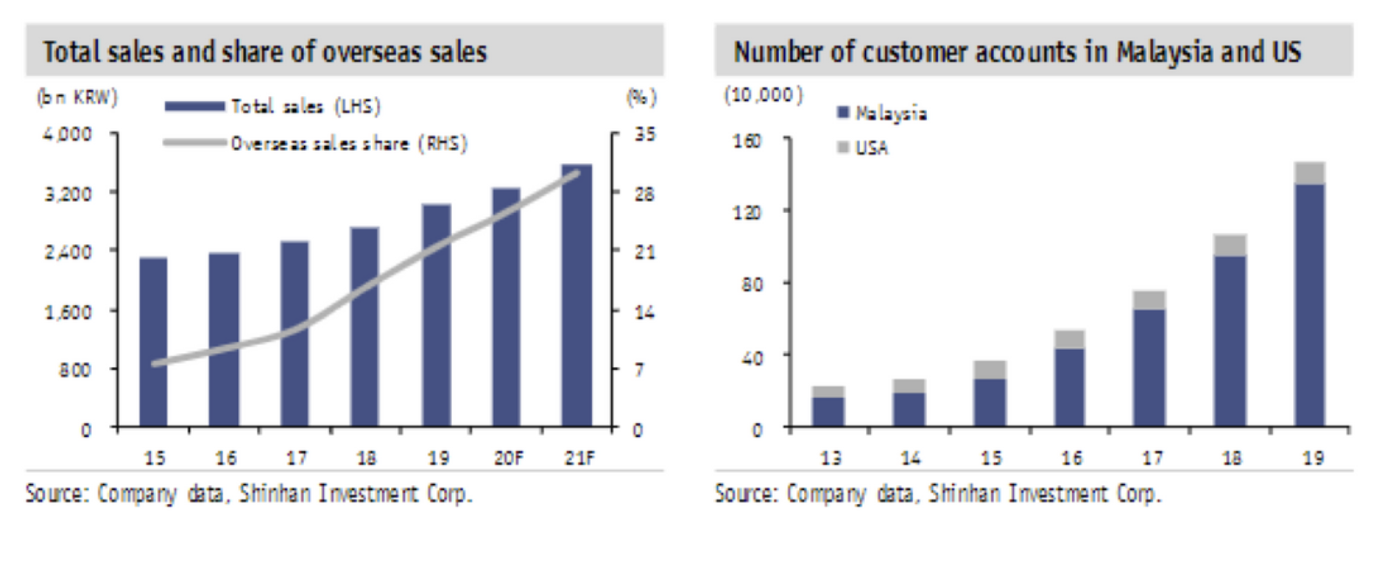
At purchase, Coway traded for about 12x 2021 earnings, which is a significant discount to its historical roughly 20x earnings multiple. This discount seemed to be attributed to the maturing of Coway’s primary South Korean market, uncertainty around changes in ownership, and a substantial cut to the dividend payout ratio in favor of deleveraging and growth. It is true that South Korea represents an increasingly mature market for Coway; however, the company has demonstrated the ability to grow internationally. For example, Coway has been successfully expanding in Malaysia (expecting roughly 20% of total 2021 revenue) and should continue to16 grow in Malaysia at 20-30 percent a year for a few years. As illustrated below, Coway is successfully growing overseas sales.
Coway no longer has management uncertainty; Netmarble, a growth-oriented gaming company in South Korea, recently purchased a 25% stake in Coway and took control of Coway’s board. Soon after taking control, Netmarble cut Coway’s dividend payout ratio substantially, which supposedly disappointed dividend funds and many individual investors who held the stock. While Netmarble has not yet released its medium and long-term strategy to shareholders, my understanding is that the growth-oriented company plans to primarily use the cash Coway generates to pursue further R&D and international growth. Netmarble plans to replicate Coway’s Malaysia success in other countries such as Indonesia.
At a high level, I believe demand for air and water purification will grow as consumers worldwide become more educated on what is unfortunately, in many cases, inadequate air and water quality. Furthermore, I believe consumers will increasingly favor spending on other Coway products that make life easier, more comfortable, and healthier, especially as they spend more time at home.
Coway has a long runway of opportunities to invest cash flow in R&D and international growth opportunities. I expect Coway’s long-term growth to be mostly recurring non-cyclical predictable cash flow, combined with eventual multiple expansion, which will make this stock a strong returning investment with minimal chance of permanent loss of capital.
Ally Financial
Ally operates one of the largest online banks in the US and specializes in automotive finance. Stable low-cost deposits make up about 75% of Ally’s funding, and this number is growing at over 7x the industry deposit growth rate. Like Sallie Mae, which is there for their customers when they need them and does not stop lending in tough times, Ally Financial is there for their dealership customers when dealers need them. This creates a solid competitive advantage for Ally.
Since its 2014 IPO, Ally has significantly grown earnings, and has returned over $4 billion to shareholders in the 4 years prior to 2020. Despite this financial success, the business continued to trade for well under its $35+ of tangible book value even before the pandemic began. In 2019, Ally returned $1.3B to shareholders, grew earnings 12% to over $3.70 a share, and raised its dividend. In 2020, management expected to grow EPS 10-15 percent, and Ally was expected to repurchase at least another $400 million of stock. Due to the temporary coronavirus crisis, Ally suspended its buyback for 2020, and 2020 earnings took a hit due to provisioning for future losses. However, Ally’s ability to generate cash over the medium and long term remained intact.
Due to the pandemic, some people will permanently shift to working remotely and no longer need cars; however, Ally’s used car assets gained in value as many people avoided flights and mass transit and opted to buy less expensive used cars instead of new cars. Plus, car manufacturers reduced production during the crisis, which led to record demand for used cars. Ally's management, during the pandemic, recognized that “quantitatively” they should have and could have been repurchasing shares, but due to the optics, tentatively planned to resume share repurchases within the first half of 2021. Two days ago, Ally announced a $1.6 billion share repurchase plan for 2021.
The Fund’s one concern with Ally is that Ally's CEO, Jeffrey Brown, seems to not only desire to return capital to shareholders through share repurchases and dividends, but also desires to grow Ally beyond its core automotive business through acquisitions. While he may be successful at creating synergies and growing the business faster than I anticipate, there is a material risk that Ally makes investments that are substantially worse than I would make had Ally returned the capital to me. This year Ally pledged $30 million to boost economic mobility, and the response from Ally on how this will drive long-term intrinsic value for shareholders was insufficient. Shareholders can make their own philanthropic donations. About a year ago, Jeffrey Brown attempted to purchase a credit card company, which, in my judgment, was another poor decision. I remain disappointed in Ally’s inability to communicate a focus on its core business and a commitment to return all excess capital to shareholders.
Bank of Butterfield
Bank of Butterfield is a Bermuda-based bank (was Bermuda’s first bank) with strong market share in attractive markets such as Bermuda, Cayman, Guernsey, and Jersey. The bank also offers specialized financial services in the Bahamas, Switzerland, Singapore, and the UK.
The bank has sticky fee-based businesses, such as multi-generational trusts, asset management, and foreign exchange for local businesses that need to convert currency for purchasing goods from outside of their respective markets. The bank earns a roughly 20% ROE in a normal rate environment and a low teen ROE in a zero-rate forever environment. These strong metrics are complemented by the fact that Butterfield takes virtually zero credit risk; 99% of its investment portfolio is in AAA-rated securities, primarily US guaranteed securities.
Unlike U.S.-based banks, Butterfield continued to buy back stock and pay dividends throughout the coronavirus crisis. The bank has a 50% payout ratio and management is committed to maintaining this sustainable dividend.
Management has a solid track record of making intelligent acquisitions. For example, in the last couple of years, Butterfield acquired Deutsche Bank’s banking and custody business in the Cayman Islands, Jersey, and Guernsey as well as ABN AMRO’s 45-year-old Channel Islands subsidiary. Management is committed to continuing to make attractive acquisitions. As large banks may be asked to boost capital, these large banks may consider selling non-core assets, which may make the next year or so a particularly attractive time for Butterfield to make acquisitions. Management is also committed to cutting costs. For example, the costs of an employee in Bermuda are significantly higher than in Canada, so management has been cutting jobs in Bermuda and adding jobs in their Canadian office.
Two Material Negative Drivers of Performance
Wells Fargo
Wells Fargo has historically been a safe lender that has been profitable every year for decades. This includes the financial crisis and will include the coronavirus crisis. The business has a sticky customer base, which provides it low-cost deposits and helps it earn a consistent normalized roughly 1%+ ROA and 10%+ ROE. This is a boring business, but a quality business that should trade at a significant premium to tangible book value.
The legal fines, while noisy, have been by and large immaterial to Wells Fargo's intrinsic value. The asset cap, however, has been extraordinarily painful. Fortunately, it is not a matter of if but a matter of when this asset cap will be lifted. Furthermore, their relatively new CEO, Charlie Scharf, has set out to cut over $10 billion of annual costs. Conceptually, his argument that Wells Fargo is not structurally different than Bank of America and JP Morgan makes sense; thus, there is no reason why Wells Fargo cannot, over time, bring its efficiency ratio in line with that of competitors.
The coronavirus crisis has caused a contraction in NIM and an increase in provisions for Wells Fargo. This was unlucky. It is probable that another crisis will come sometime in the next decade, but 2020 earnings do not represent Wells Fargo's normalized earnings. Surprisingly, Wells Fargo stock is being priced as though 2020 earnings do represent normalized earnings. As Wells Fargo cuts expenses, goes back to normal losses, has the asset cap lifted, reduces negative sentiment driven by headlines, and has at least marginally improved NIM over time, the stock should reflect Wells Fargo's normalized earnings and the high quality of this business that consistently generates profits in good and bad times.
Despite this investment thesis not being flawed, the position was cut dramatically in December primarily to make room for Bank of Georgia, which has far superior profitability and growth prospects.
Momo
Momo stock fell dramatically after its Q2 earnings call on September 3rd, 2020.
During this earnings call, Momo's management reduced guidance as they announced a focus on reconfiguring their core Momo live streaming product to deprioritize a small group of high-paying users and to gain a larger pool of medium and lower-paying users. Similarly, the company plans to deprioritize the most popular content creators to draw more traffic to less popular creators. This move should be a positive for the business medium and long term but negative short term.
Furthermore, the high-paying users on Momo seem to be from manufacturing and trade related sectors in China, and their incomes and consequently their spend on Momo will take some time to recover due to the coronavirus.
The good news is that Momo announced a $300 million buyback, which is well timed as the stock is down significantly Tantan, the Tinder of China which Momo owns, continues to progress. There is a clear roadmap to monetization, and this technology is dramatically undermonetized as the company rightly continues to focus on its growth.
This cash generative business should not trade at 4x-5x earnings ex cash. As Momo's livestreaming business resumes growth, and as Tantan continues to be monetized, I believe that earnings will improve, and consequently, the market may price the business more rationally.
China’s Challenges
The reason the Fund is not adding to its position in Momo is because I believe the idea of China being an investable market that does not in of itself present a material risk of permanent loss of capital is less clear. While it was previously understood that the Chinese Communist Party could exercise their control of all Chinese businesses, the high-profile events concerning Jack Ma further demonstrate these risks exist not only in theory but also in practice.
Furthermore, while the timing is unclear, it does seem likely that China will have to go through an adjustment (much greater than that of the US & EU) due to its unproductive growth and excessive debt buildup. China is experiencing a decline in its working-age population, which implies it will be challenging for the nation to continue its strong growth without a dramatic increase in robots. Also, China’s housing market is oversupplied; thus, a decrease in housing construction investment is likely to be a drag on China’s GDP growth. Also, China’s household debt as a percentage of income is now higher than that in the US, which will further restrict growth. Chinese banks, small and large, have material problems on both the asset and liability sides. There is real evidence that China’s published GDP growth is overestimated by fake data. And as Peking University professor of finance, Michael Pettis, eloquently explains, the fact that China does not write down bad investments, which would reduce future GDP, in and of itself implies distorted savings and GDP statistics. The real value of Chinese savings is likely to look quite different than the financial value post adjustment. It is as though Chinese “savings” are in WeWork prior to valuation adjustment (though not that extreme). As John Kenneth Galbraith noted in his 1929 book on the American stock market crash, “bezzle,” or hidden losses that have not yet been allocated, exist in every economy; however, China’s long-time reliance on debt for growth and political system that prioritizes harmony (which would mean an avoidance of crises), implies that China is likely to have an extremely long adjustment with little to no growth.
Qualitatively, a self-made billionaire Chinese woman privately told me that she believes her net worth in dollar terms is less than half what her publicly traded stock implies. Her view, which she claims is shared by all her wealthy Chinese friends, is that without capital controls, money would flow out and cause a severe depreciation in the local currency.
Material Positions Sold & Reasoning
Joyy Inc
I believed Joyy's core domestic live streaming business would continue to be a stable cash cow and its overseas businesses would likely continue to grow. I also believed Joyy was undervalued for a growth stock, especially because if overseas growth did not materialize, Joyy's core domestic live streaming business alone was worth close to the entire EV. (This idea of margin of safety was confirmed when, on November 16th, 2020, it was confirmed that Baidu agreed to purchase Joyy's domestic business for $3.6B in cash.)
However, as more economically sensitive names sold off significantly more than Joyy during the coronavirus crisis, Joyy became less attractive on a relative basis. Additionally, India banned Chinese companies such as Joyy after the China-India border scuffle in which people were killed, and while there was no certainty that the ban would be permanent, there was also no certainty that the ban would be temporary. India presented a major market for Joyy long-term, so this was negative news. Also, US measures to potentially delist some Chinese firms and the generally souring relations between the two countries was a negative development. Plus, it was not clear that Joyy's fast-growing overseas short-form video business, Likee, could compete with TikTok in the medium to long term. And despite these material negative developments, the consensus seemed to be increasingly excited about Joyy's overseas businesses, which implied less of a margin of safety should overseas growth worsen.
Some Joyy was sold in March to make more room for distressed holdings that became relatively more attractive. The last of the Joyy position was sold for a profit in 3Q as analysts became more optimistic on Joyy's overseas businesses (possibly due to a temporary boost in usage caused by the coronavirus), and as I became aware of a more attractive opportunity in Alliance Data Systems.
Alphabet & Facebook
During the depths of the coronavirus crisis, in March, stocks crashed, but stay-at-home technology businesses such as Alphabet and Facebook sold off considerably less than cyclical financial businesses. The Fund sold Alphabet and Facebook to make more room in the portfolio for businesses trading at distressed prices. For example, at the time of sale, I viewed the long-term returns of AerCap, which at the time traded for about 2x normal earnings, as relatively more attractive.
However, both Facebook and Alphabet are phenomenal businesses that remain undervalued, so it is possible that The Fund allocates capital to these businesses again at some point in the future.
Micron Technologies
The Fund sold its position in Micron to make room for more attractive opportunities.
The fund maintained conviction in its view of stable DRAM supply based on the application of George Soros' theory of reflexivity as outlined in the inaugural letter. And the fund maintained conviction in demand for DRAM driven by the growth of cloud computing and increased memory per phone required in an ever-increasing number of phones.
However, these views seemed largely priced in at this substantially higher share price, and the outlook pertaining to self-driving vehicles ushering in a new seismic wave of demand for DRAM seemed to be far into the future. While I am willing to be patient and wait for investments to materialize, I do not believe in making investments that are fully dependent on new technologies materializing decades in the future.
While it remains likely that self-driving vehicles will drive demand for DRAM at some point, upon further review, it seemed that consideration of this component of the Micron investment could be returned to at a significantly later date, especially because Alliance Data Systems appeared to be a superior opportunity.
Joshua B. Barach
Founder & Chief Investment Officer
Legal Information and Disclosures
This letter was originally distributed on January 12, 2021. Performance information has been removed from the version published here, in accordance with the firm's policy on publicly available materials, adopted in 2026. Because the removals were made largely by cutting rather than rewriting, some passages are incomplete or end abruptly. No other facts have been altered.
This letter is published by Philip Equities and may be read and shared in the form in which it appears here. It may not be altered, excerpted in a way that misrepresents its contents, or presented as the complete letter as originally distributed.
This letter does not constitute an offer to sell or a solicitation of an offer to buy any securities. Any offering of interests in Philip Equities, LP and/or Philip Equities II LP will be made solely pursuant to the Fund's Private Placement Memorandum and related subscription documents, which govern in all respects and should be read in their entirety prior to any investment decision.
Performance Presentation: Performance information has been removed from the version of this letter published here, in accordance with the firm's policy on publicly available materials. It is available to qualified investors on request, together with the disclosures that accompany it. Past performance is not indicative of future results. Wherever there is the potential for profit, there is also the possibility of loss.
Volatility and Drawdowns: The Fund's concentrated investment approach and use of leverage can produce severe short-term drawdowns, including in periods when the long-term investment thesis remains intact. Investors should expect significant volatility and potential drawdowns of substantial magnitude.
Case Studies: The AerCap and Sallie Mae case studies presented in this letter are provided for illustrative purposes only and were selected to demonstrate the Fund's investment process and behavior during periods of market stress. They may not be representative of all investments made by the Fund. Past investment decisions and their outcomes do not guarantee similar results in the future. Other investments may have resulted in losses.
An investment in a private investment fund is speculative and involves a high degree of risk. Opportunities for withdrawals or redemptions are restricted, so investors may not have access to capital when needed. There is no secondary market for interests in private investment funds and none is expected to develop. An investor should not make an investment unless it is prepared to lose all or a substantial portion of its investment.
Forward-Looking Statements: This letter contains forward-looking statements, including statements regarding expected returns, business prospects, and market conditions. Such statements reflect views as of the original publication date and are subject to risks and uncertainties that could cause actual results to differ materially. Philip Equities undertakes no obligation to update any forward-looking statements.
Nothing herein should be construed as legal, tax, or investment advice. Prospective investors should consult their own advisors regarding legal, tax, and financial considerations relevant to their particular circumstances.
© 2021 Philip Equities, LP.